• Photo by RDNE Stock project: https://www.pexels.com/photo/hand-leaving-white-lilies-on-grave-8865750/

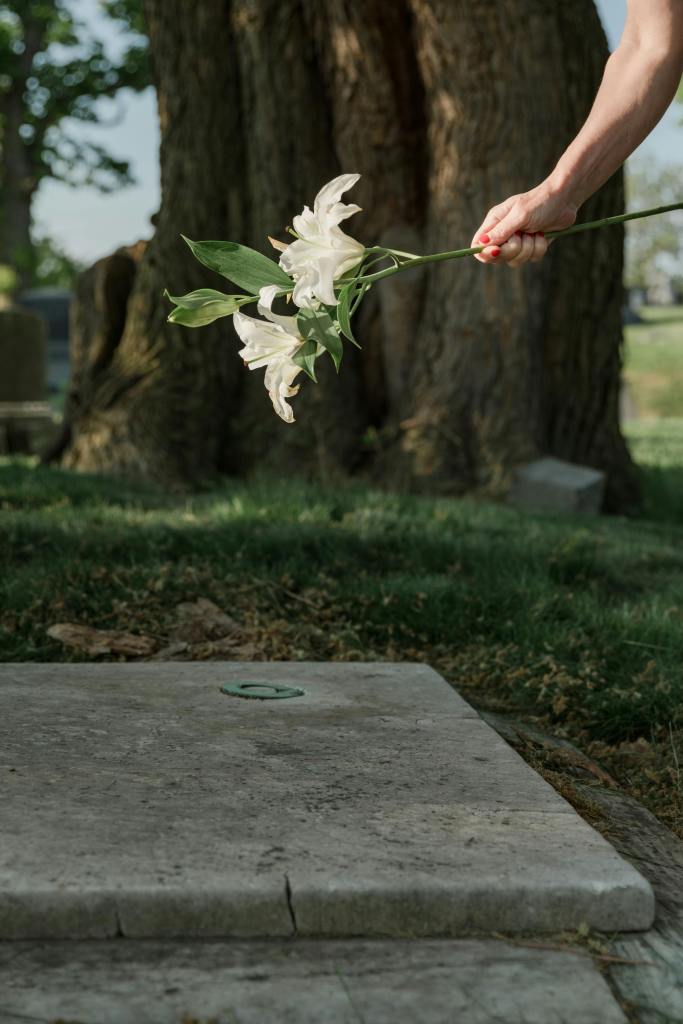
    Mira arrived early, the morning air crisp and trembling, carrying the scent of their city, of their streets, their cafés, the hidden corners where they had laughed and whispered like no one else existed. Around her neck, the green scarf — his favorite — warm against her chest, heavy with memory. She wrapped it tighter as she stepped onto the familiar cobblestones, feeling the pulse of anticipation and fear mingling in her veins. Every shadow seemed to hold him, every breeze whispered fragments of their past. Her heartbeat thrummed like a drum, a wild rhythm of hope and dread.

    She paused, surveying the meeting place, every detail painfully familiar: the bench where they had shared secrets, the tree under which they had first promised each other everything. A soft tune floated from a nearby café, “Rahein Na Rahein Hum,” fragile and lingering, threading through the morning air. Mira closed her eyes, letting the melody sweep over her, each note unraveling memories of laughter, of stolen glances, of nights that seemed endless. Time seemed to stretch, every second heavy with meaning, every heartbeat echoing the song, until… her eyes fell on her phone — a single message waiting. Short, deliberate, inevitable, and poised to shatter her world.

    “Mira, being with you made me alive. I became the man I always wanted to be — brave, open, fully myself. But that man only exists when I’m with you. In the life I have, I cannot be him. I cannot give you everything you deserve. I am so sorry. I will always love you — even if loving you means I can never be with you.”

    The words struck like a hammer. Mira’s chest tightened, the scarf tangling in her fingers as if it were alive. Shock. Complete, absolute, final. No excuses. No “later.” No room for hope. The love they had built — sacred, unshakable, infinite in her mind — ended in one instant.

    And then she saw the truth. The cruel, unvarnished truth: choices are usually made by humans disguised under helplessness. The bravery it required to bring their private world into reality terrified him. He lived a life of outsourced responsibility, shaped more by circumstance than conscious choice. Mira had been the only thing real, his window to elevate himself to something extraordinarily beautiful — and he had betrayed that. Some people do not choose what is beautiful; they choose what is familiar, because it is less terrifying, requires less effort, less work.

    Somewhere, in the shadow of that message, he crumbled. He remembered the laughter in cafés that had belonged only to them. The brush of her hand against his. The late-night confessions, whispered truths that had bound them as one. He longed for her, yes, in every quiet moment, but he could not reach her. To reach her would betray himself, betray the cowardice he had dressed in inevitability. He carried the weight of his choices: betraying himself every day, telling himself they weren’t meant to be, that he belonged somewhere else, shrinking a little with each passing betrayal. He loved her fiercely, but love alone had never been enough to make him brave.

    Mira, on the other hand, felt his absence as a physical ache. Each ordinary thing became a trigger: the scent of coffee, the echo of a laugh, a forgotten corner in the city. She relived each touch, each glance, each stolen night, as if the universe itself were pressing the memory into her flesh. Her love had been real. Entire. Infinite. And yet, it had been denied the world’s confirmation.

    And still, she believed.

    She believed in destiny — in the strange, cruel architecture of timing and fate. She believed in magic — the invisible hand that shapes life beyond what humans dare to choose. Even in the absence, even in the betrayal, she understood that life without such depth, without such love, would be dull, flat, meaningless. The scarf on the bench, the city around her, the ache in her chest — all proof that something beyond human cowardice had touched her life, and it mattered.

    Her wait, her longing, was no longer desperation. It was faith. Faith in what had been. Faith in what could be. Faith in the beauty and terror of a universe that delivers truth before comfort. She walked on, carrying the weight of love and loss, aware, alive, reverent, still believing in magic.

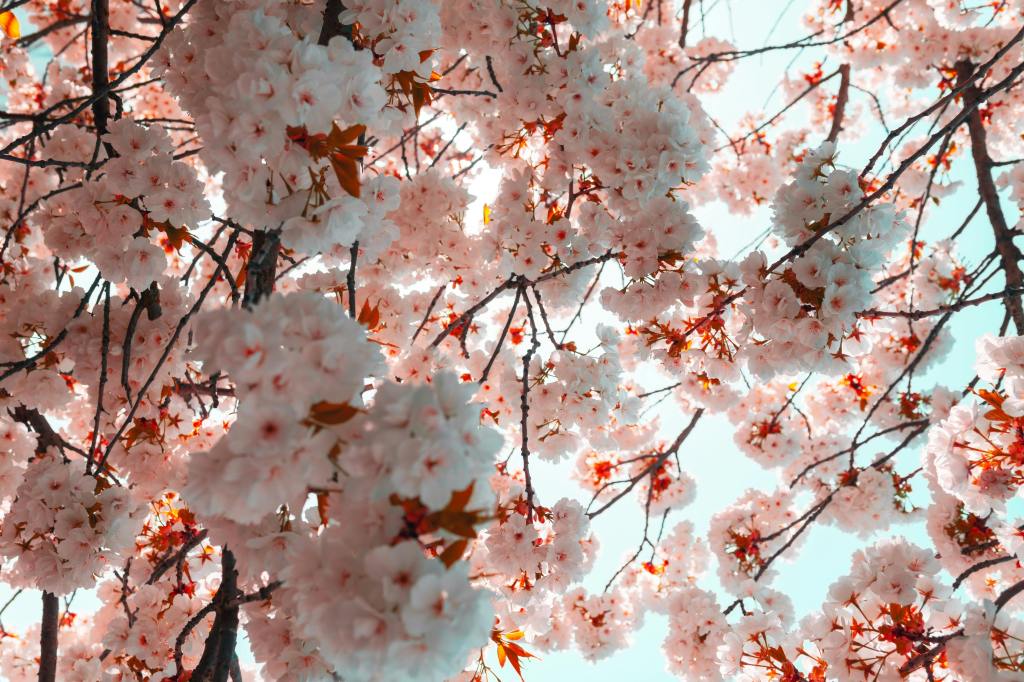
    Because some loves, she realized, are too powerful to disappear. They linger, quietly, reshaping the world, reshaping the self. And Mira — still full of depth, still capable of wonder — would carry that proof with her forever. Sakura’s petals fell somewhere far away, but she felt them in the memory, in the heartbeat, in the echo of all they had shared.
  • Photo by Mitchell Henderson: https://www.pexels.com/photo/low-angle-photography-of-cherry-blossoms-2058853/

    It began with fragments. Small, ordinary fragments of observation he offered casually, like hints dropped into her world. He noticed her usual beige, black, white outfits—not judgmentally, but with quiet curiosity. One afternoon, he suggested she try a soft green scarf, another time a muted pink top, saying nothing more than a single approving nod or the briefest of smiles.

    At first, Mira laughed at him, amused by the gentle insistence. She tried the scarf, then the top. And slowly, almost without noticing, she began to feel the effect—the way these colors shifted her presence, the way they made her feel alive in ways she hadn’t expected. It wasn’t fashion advice. It was an invitation to be seen differently, to step into herself in small, deliberate ways. She began to experiment, embracing the subtle influence, and he watched, quietly delighted, the way a dreamer observes light catching on a new landscape.

    He spoke in stories, never performances. His humor was crooked, quiet, sometimes deliberate, sometimes accidental. Mira laughed at him, sometimes teased him, sometimes pressed him further. He leaned in with a quiet gravity that made her chest thrum. He confided in fragments—dreams he never arranged into full sentences, thoughts he polished only in private: the exhaustion of life that functions but does not breathe, admiration that never felt like understanding, small longings that weighed more than they should.

    She met him without caution. She gave him her truths freely, whimsically, creatively, like a painter flinging color across a blank canvas. Her imagination took him to distant streets, impossible cafés, imagined cities and impossible possibilities. Sometimes he followed. Sometimes he surprised her by leading, offering darker truths, sudden hopes, playful confessions.

    Their orbit grew addictive—not the people themselves, but the access. Mira lived in bold thoughts, vibrant gestures, whimsical flights. He, measured, reflective, dreamer, daring enough to share fragments. Together they built a second life, invisible to the world yet intensely alive. Alive as they would rush to return into it at every chance. Boundaries blurred naturally—hands lingering, pauses extending, laughter stretching into silence and back.

    Him naming her Sakura was the word that opened a door with no key—a space he could enter without masks, where laughter, longing, and confession flowed freely. With that name, he offered himself: loving, gentle, attentive, restrained yet surrendered. With that name, Mira laughed, pushed, tested, twisted, pressed closer, and he responded with quiet gravity that made her chest hum.

    They spoke every day. About bitter coffee, late trains, impatience with mediocrity. Then the conversations tilted inward, pulling them deeper. Dreams, small desires, fantasies of movement, quiet rebellions. Colors, wardrobe, ways of living boldly. Mira experimented; he watched, fascinated, deliberate.

    Time did not rush them. Restraint carried heat. Each shared fragment, each glance, each brush of hand against hand became dangerous, almost unbearable in its intimacy. Their private world tightened around them, a gravity neither could resist.

    When intimacy finally arrived, it did not announce itself.

    It slipped in the way tide does—quiet at first, then undeniable.

    They were close. Too close to pretend it was accidental. The space between them had been shrinking for weeks, calibrated by restraint, charged by everything unsaid. When his hand found hers, it wasn’t tentative. It settled there as if it had always known the shape. Mira felt it immediately—the way her body recognized something before her mind could interfere.

    He leaned in, slow enough that she could have stopped him. She didn’t.

    The world narrowed to breath and proximity. His forehead rested against hers. The contact was light, reverent, unbearable. She could feel the restraint in him—the deliberate control, the choice to stay just short of urgency. That choice was what undid her.

    When his lips finally met hers, it wasn’t hunger that moved him. It was certainty.

    The kiss deepened not through force, but through surrender. Time stretched. Her fingers tightened in his shirt as if anchoring herself. His hand slid to her waist, firm, claiming, grounding her there. She felt herself soften into him, felt the exact moment resistance gave way to want.

    He pulled back just enough to look at her.

    His voice dropped. Steady. Unmistakable.

    “You’re mine.”

    The words didn’t land as possession. They landed as recognition. As arrival.

    Mira didn’t hesitate.

    “And I’m yours.”

    She felt it as she spoke—the truth of it moving through her body, settling somewhere permanent. He kissed her again then, deeper, unguarded. His control loosened. Her breath caught. The room seemed to tilt in response.

    There was no doubt in it. No negotiation.

    Only the overwhelming sense that they had crossed into something that would not loosen its grip—not because it was reckless, but because it was chosen.

    Afterward, they stayed close. Foreheads touching, breathing each other in as if confirming the world still existed outside this moment. His fingers traced slow, absent lines along her arm—a gesture so intimate it felt almost sacred.

    Mira understood then.

    This wasn’t an escape.

    It was a claiming—the kind that marked them, whispered into the marrow, that here, in this exact breath, they belonged wholly to one another.

    And once claimed, something inside her knew—it would never again accept half-presence, half-truths, or love spoken without consequence.

    Sakura bloomed here—vivid, unguarded, knowing that even the brightest petals fall too soon.

  • Some touches, some names, leave marks that outlast the world around them.

    Courtesy: Photo by Aline de Nadai on Unsplash

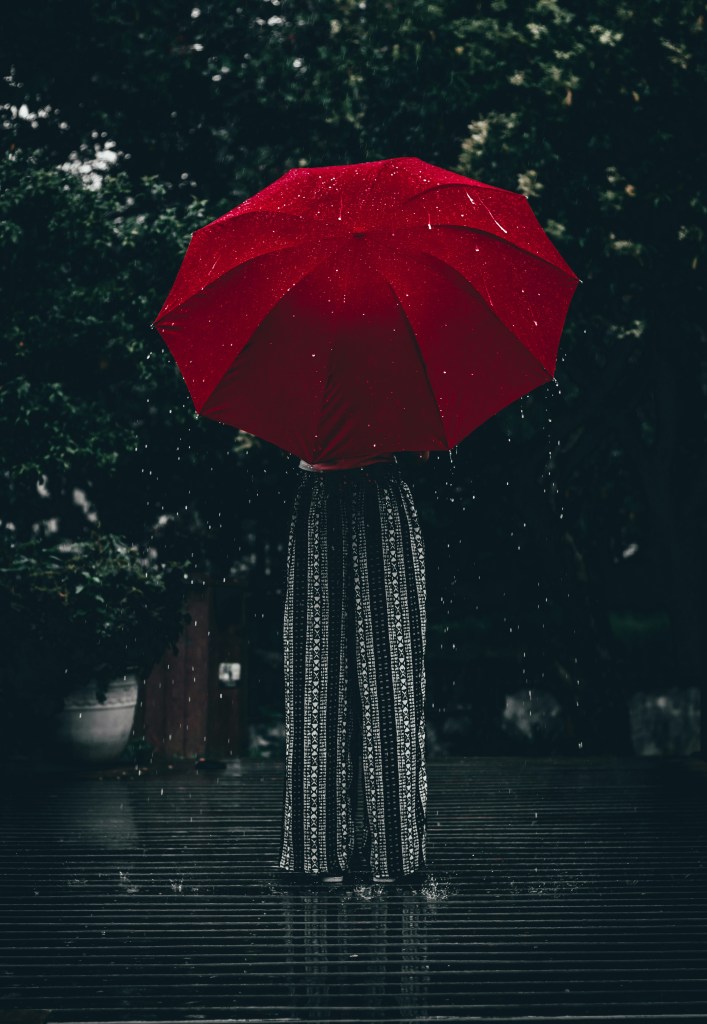
    He looked at her differently. She noticed it not in grand gestures, but in the quiet precision of his gaze. He lingered just long enough to unsettle her, to make her feel recognized in a way no one else had. There was intelligence in it, care, calculation—but also warmth, a subtle insistence that this moment, however fleeting, mattered. Outside, the rain fell in soft, relentless sheets, blurring the world around them, but sharpening the space between. Each drop seemed to echo the electricity in that look, making her feel both conspicuous and invisible at once, as if he were seeing through the noise of the world straight into the unspoken corners of her mind.

    He gave her a name. Sakura.

    It wasn’t casual, it wasn’t playful. He had chosen it. Carefully. Methodically. Japanese, yes—but in a way that mirrored the worlds he loved: literary, considered, deliberate. When he said it aloud, it wasn’t just a name—it was a bridge, a signature, a quiet declaration that this space between them was private, sacred, theirs alone. There was reverence in the way he pronounced it, the slightest inflection making it feel like a secret offered on a tilted silver tray, delicate and luminous.

    Mira felt it immediately. Something shifted—a tremor running through her chest, subtle but undeniable. His words were always measured, his silence meaningful. Every pause carried intention. Every glance hinted at layers she couldn’t yet see. For someone who thrived on social chaos, it was intoxicating to feel seen with that exactness. Even the background hum of the city—the chatter of friends, the clink of glasses, the flicker of neon lights—seemed to fall away when he looked at her, leaving only that precise, piercing moment.

    In the small interactions that followed, she began to notice the way he could be a child in a man’s body. Stories from friends had hinted at quirks, odd habits, a strange innocence—he was not naive, but he was shaped by life in ways that made him unpredictable, tender, occasionally reckless in thought. He wasn’t shrewd, he wasn’t calculating for the world’s gain. He was simply himself, curious and contained, with a secret humor that Mira delighted in drawing out. There was a softness in the way he listened, a vulnerability he rarely offered, like a room unlocked only for her.

    She was bold. She made him laugh. She teased, pushed boundaries, played with the edges of propriety around friends, and he responded—not defensively, but with a quiet amusement that made the air between them lighter, sharper, more electric. Each smile he offered felt like a spark, each glance a subtle nudge into a space where nothing else existed but the two of them. In public, he was a mystery: measured, almost unreadable. But she caught glimpses of him in the margins—small smiles, fleeting gestures, the way his attention lingered where it shouldn’t, like he was quietly composing a memory only they could share.

    And Mira? She could not yet name what this meant. The thrill, the recognition, the quiet insistence that someone—just one person—understood her so completely. All she knew was that when he spoke Sakura, the name was not merely sound—it was a promise, fragile and weighty, like a single note in a symphony held just long enough to resonate in the chest.

    It would haunt them, this naming, this careful attention, long after laughter faded, long after the world intervened. In the pause between words, in the half-smiles, in the rain-drenched sidewalks of fleeting afternoons, the imprint of this moment would linger, both a gift and a quiet, unanswerable question.

    To be continued…

  • The Discomfort

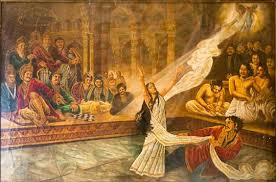
    Reading The Palace of Illusions is a strangely unsettling experience. Divakaruni’s retelling immerses you in Draupadi’s mind—her longings, frustrations, and moral reflections—but it also forces you to confront ethical tensions: a man who harmed her dies noble without apology, her husbands repeatedly fail her, and righteousness in war is more complicated than it seems. This discomfort is precisely what makes the book compelling, prompting readers to question heroism, justice, and forgiveness.

    Karna: Regret Without Accountability

    Divakaruni humanizes Karna in a way that feels emotionally layered. His internal conflict, regret, and poetic longing add psychological complexity to a figure often remembered only for his misdeeds. However, this humanization has ethical consequences. Karna confesses his failings to Bhishma but never personally apologizes to Draupadi, yet he is granted narrative and cosmic redemption. Confession to another man is not accountability; internal guilt is not justice. His ego remains intact, and while he dies noble in his own story, Draupadi’s moral and emotional experience is sidelined. This tension between empathy for Karna and ethical responsibility is central to the discomfort the book creates.

    Draupadi: Immaturity, Yearning, and Complex Choices

    Divakaruni brings Draupadi vividly to life, showing her passion, intelligence, and emotional intensity. Yet her character is often frustrating. Her immature handling of Karna, her yearning, and lack of direct confrontation fail to assert clear boundaries. She stays with the Pandavas—the same men who did not defend her during the dice court insult—criticizing them throughout the 12 years in exile instead of choosing her young children. These choices are ethically complicated. While the book hints at her regret and reflection later, it is mostly internal and does not offer her full closure or independent empowerment. Here, Divakaruni gives us real emotional texture, but sometimes at the expense of clear moral guidance.

    Righteousness and the Pandavas’ Moral Contradictions

    Divakaruni deserves applause for acknowledging that the war is morally ambiguous. Even the Pandavas—who constantly speak of dharma—often act through cunning, betrayal, or opportunism. Killing Karna unarmed, Bhima’s vengeance, and Arjuna’s strategic deceit show that righteousness is complicated. The narrative balances admiration for the Pandavas’ virtues with recognition of their flaws, highlighting the tension between moral ideals and actions.

    Oh, the Beloved, Krishna!

    Oh, the Beloved, Krishna—magnetic, clever, and impossibly charismatic—glides through the story like a force of fate. Divakaruni shows him as loving, wise, and a guiding presence for Draupadi and the Pandavas, yet always pulling strings behind the scenes. He nudges Arjuna, orchestrates Karna’s downfall, and shapes the course of the war, often using people’s hearts and choices as pieces on his board. It’s hard not to wonder: does his vision truly lead to a greater good, or is it a Thanos-like calculus, where the ends justify massive human cost? Is his guidance justice, strategy, or something in between? Krishna’s brilliance, his secrets, and his selective interventions leave us enthralled, challenged, and unsure—exactly the tension that makes him unforgettable.

    Conclusion

    The Palace of Illusions is a beautiful, lyrical exploration of Draupadi’s mind, making her one of literature’s most emotionally vivid heroines. Divakaruni applauds female interiority, emotional depth, and moral questioning, but the book also challenges readers with ethical tensions: Karna’s unearned redemption, Draupadi’s immaturity, and the Pandavas’ moral compromises. The novel is at once engaging, lyrical, and thought-provoking, leaving readers both moved and morally unsettled—a sign of its narrative power.

    Let me know your thoughts in comments.

  • Photo by Tobi: https://www.pexels.com/photo/closeup-photography-of-grass-field-572007/

    It was a sunny day. The kind of day where you feel smug about living in Canada because it isn’t -40°C. I was walking with my toddler through our very proper suburban neighborhood — think hydrangeas, Ring cameras, and passive-aggressive lawn signs about dandelions.

    No sidewalk, of course. Because sidewalks are apparently optional in neighborhoods where everyone drives a Tesla. So, like any human avoiding moving traffic, I briefly stepped onto a patch of someone’s lawn.

    You’d think I’d set it on fire.

    Out came the man of the manor — eyes wide, jaw clenched, fingers pointing as if he were casting a curse. I couldn’t make out the words (probably for the best), but the tone was universal: How dare you?

    Apparently, I had committed suburban sin #1: touching grass that wasn’t mine. While brown.

    Welcome to Canada! (Terms & Conditions Apply)

    Canada loves immigrants. Says so on the website. Immigration, Refugees and Citizenship Canada practically sends you e-vites with glitter.

    “Come help our economy! Come enrich our culture!”
    (But also: don’t live too close, don’t cook too loudly, and definitely don’t step on our lawns.)

    So we do all the things.
    We get jobs.
    We pay taxes.
    We overpay for housing and pretend we enjoy kale.
    We even start saying “sorry” when someone else bumps into us.

    But one moment of “incorrect foot placement,” and suddenly you’re Public Enemy Number Lawn.

    Ah, Canadian Politeness™

    The thing about Canadian politeness is: it’s a performance. A delightful one! Like Broadway with better snow tires.

    Everyone’s smiling. Until they’re not.
    Everyone’s welcoming. Until your accent shows.
    Everyone’s “so nice.” Until economic downturns hit — and somehow, brown resumes are the first to get shredded like cheese.

    You realize pretty quickly that politeness isn’t the same as respect. It’s just better branding.

    You Can Buy the House, But Not the Neighborhood

    You saved. You sacrificed. You bought the house. You even learned how to separate your compost. You thought that made you part of the community.

    Wrong.

    You’re part of the real estate market.
    You’re part of the diversity stats.
    You’re part of the multicultural food festival once a year.

    But one misstep — literal or social — and the mask slips. And someone like Lawn Guy reminds you:

    You’re still the guest at a dinner party where you brought the food, but they won’t give you a seat at the head table.

    For My Fellow Foot-Offenders

    To every newcomer who’s ever been glared at for grilling the “wrong” meat or playing music at a respectable volume of joy — I salute you.

    To every brown person who’s bought the home, trimmed the hedges, baked banana bread for the school fundraiser — and still got the “where are you from originally?” question — I see you.

    We’re not ruining the country.
    We’re just walking through it.
    Occasionally on a lawn.

    Dear Mr. Backyard Border Patrol,

    Don’t worry. I’ll avoid your sacred grass.
    But I won’t apologize for existing in your line of sight.

    Because Canada isn’t just yours.
    It’s ours.
    I just hope someday we all get to walk through it — freely, respectfully, and yes, sometimes accidentally — without being made into the villain of a suburban soap opera.